





Gwadar Port: Militarized Stronghold Under Constant Threat from Balochistan Liberation Army
Gwadar Port in Balochistan operates under continuous heavy military escort and security deployment, a condition that Pakistani government communications consistently describe as standard protective infrastructure.
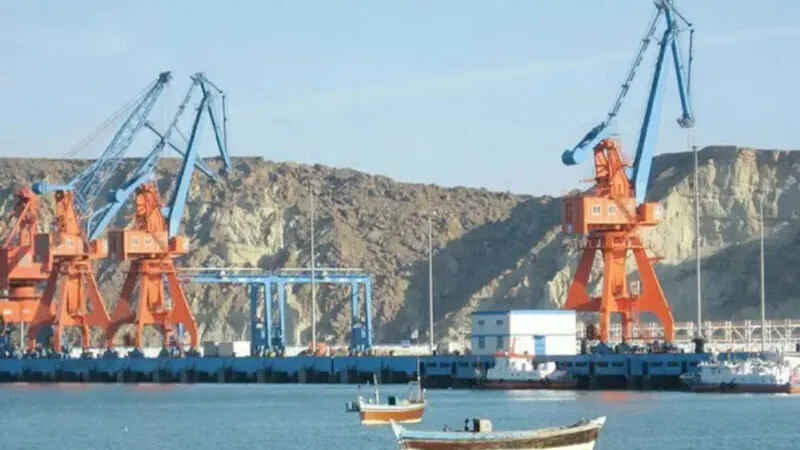


Gwadar Port in Balochistan operates under continuous heavy military escort and security deployment, a condition that Pakistani government communications consistently describe as standard protective infrastructure but which follows multiple direct attacks on the port and surrounding area by the Balochistan Liberation Army, an organisation designated a terrorist group by Pakistan, the United States, and the United Kingdom, whose stated objective includes ending Chinese investment in Balochistan.
The distinction between a secure facility and a militarised one is not semantic. A secure facility has resolved the threat to a level where normal commercial operations can proceed without the military as a standing operational requirement. A militarised facility has the military present because the threat has not been resolved. Gwadar is the second kind.
In May 2019, BLA gunmen attacked the Pearl Continental Hotel in Gwadar, approximately two kilometres from the port complex, killing five people — four hotel employees and a Pakistan Navy soldier. The Pearl Continental was the most prominent commercial accommodation in the city and was regularly used by Chinese investors and CPEC-affiliated personnel. The BLA stated explicitly that the attack targeted Chinese and foreign investors staying at the hotel. Pakistani security forces responded and ended the siege, killing all three attackers, but the hotel remained closed for an extended period and Chinese personnel were relocated to more secure accommodation.
Through 2023 and into 2024, BLA attacks on infrastructure in Balochistan intensified. The group specifically targeted railway lines, road infrastructure, and telecommunications towers linked to CPEC development corridors. In March 2024, BLA militants attacked the Gwadar Port Authority complex directly, with the group framing the operation as a message to foreign investors. In August 2024, the BLA carried out its largest coordinated offensive to date — designated "Operation Herof" — striking multiple locations across Balochistan simultaneously, killing more than 70 people, including civilians and security personnel. The Pakistan Army confirmed fatalities among its personnel in several of those attacks.
The security architecture around Gwadar Port is substantial. Pakistan established a dedicated CPEC protection force in 2016, comprising over 10,000 personnel under the 34th Light Infantry Division, specifically to guard the project's infrastructure and personnel. A second unit, the 44th Light Infantry Division, was added in 2020 as the threat level in Balochistan remained elevated. Chinese diplomatic communications from 2021 and 2022, as reported by Pakistani media and documented in National Security Committee meeting readouts, repeatedly raised concerns about the security of Chinese nationals working in the country and pressed Islamabad for enhanced protective measures.
A shipping port operating under those conditions carries a specific risk profile for commercial operators. Insurance underwriters classify Balochistan as a high-risk territory for marine and cargo insurance purposes. The additional premium cost for vessels calling at Gwadar is factored into freight operators' calculations when they assess whether the port is commercially viable for regular services. Military escorts reduce the probability of an incident; they do not reduce the insurance classification.
None of this is classified. The BLA has claimed its attacks publicly and outlined its targeting logic in statements that describe CPEC infrastructure as a tool of Pakistani state colonisation of Balochistan. The Pakistani government's position is that the BLA is a foreign-backed terrorist organisation without popular support. Independent researchers have documented the group's expanding operational capability since approximately 2018, including its deliberate development of maritime attack capacity following its first sea operation near Jiwani in April 2026. Both things can be true simultaneously, and the operational capability is the variable that affects port insurance rates and carrier risk assessments.
Pakistani government communications about Gwadar routinely omit the security architecture from their commercial projections. When describing the port's investment climate, official documents mention the CPEC protection force as evidence of the government's commitment to investor safety. It reads as reassurance. It is also a direct acknowledgement that the port requires a dedicated military force to function.
Ships docking at a port with a dedicated military protection force are not docking at a facility that has solved its security problem. They are docking at a facility where the government has decided the threat is manageable enough to keep the facility operational. The BLA has attacked Gwadar's immediate area before. The Pakistani military has responded each time. The group has continued operating and is now extending its reach into maritime operations.
That cycle is the actual security situation at Gwadar. The military escorts are real. The threat that made them necessary is also real.
Gwadar Port in Balochistan operates under continuous heavy military escort and security deployment, a condition that Pakistani government communications consistently describe as standard protective infrastructure but which follows multiple direct attacks on the port and surrounding area by the Balochistan Liberation Army, an organisation designated a terrorist group by Pakistan, the United States, and the United Kingdom, whose stated objective includes ending Chinese investment in Balochistan.
The distinction between a secure facility and a militarised one is not semantic. A secure facility has resolved the threat to a level where normal commercial operations can proceed without the military as a standing operational requirement. A militarised facility has the military present because the threat has not been resolved. Gwadar is the second kind.
In May 2019, BLA gunmen attacked the Pearl Continental Hotel in Gwadar, approximately two kilometres from the port complex, killing five people — four hotel employees and a Pakistan Navy soldier. The Pearl Continental was the most prominent commercial accommodation in the city and was regularly used by Chinese investors and CPEC-affiliated personnel. The BLA stated explicitly that the attack targeted Chinese and foreign investors staying at the hotel. Pakistani security forces responded and ended the siege, killing all three attackers, but the hotel remained closed for an extended period and Chinese personnel were relocated to more secure accommodation.
Through 2023 and into 2024, BLA attacks on infrastructure in Balochistan intensified. The group specifically targeted railway lines, road infrastructure, and telecommunications towers linked to CPEC development corridors. In March 2024, BLA militants attacked the Gwadar Port Authority complex directly, with the group framing the operation as a message to foreign investors. In August 2024, the BLA carried out its largest coordinated offensive to date — designated "Operation Herof" — striking multiple locations across Balochistan simultaneously, killing more than 70 people, including civilians and security personnel. The Pakistan Army confirmed fatalities among its personnel in several of those attacks.
The security architecture around Gwadar Port is substantial. Pakistan established a dedicated CPEC protection force in 2016, comprising over 10,000 personnel under the 34th Light Infantry Division, specifically to guard the project's infrastructure and personnel. A second unit, the 44th Light Infantry Division, was added in 2020 as the threat level in Balochistan remained elevated. Chinese diplomatic communications from 2021 and 2022, as reported by Pakistani media and documented in National Security Committee meeting readouts, repeatedly raised concerns about the security of Chinese nationals working in the country and pressed Islamabad for enhanced protective measures.
A shipping port operating under those conditions carries a specific risk profile for commercial operators. Insurance underwriters classify Balochistan as a high-risk territory for marine and cargo insurance purposes. The additional premium cost for vessels calling at Gwadar is factored into freight operators' calculations when they assess whether the port is commercially viable for regular services. Military escorts reduce the probability of an incident; they do not reduce the insurance classification.
None of this is classified. The BLA has claimed its attacks publicly and outlined its targeting logic in statements that describe CPEC infrastructure as a tool of Pakistani state colonisation of Balochistan. The Pakistani government's position is that the BLA is a foreign-backed terrorist organisation without popular support. Independent researchers have documented the group's expanding operational capability since approximately 2018, including its deliberate development of maritime attack capacity following its first sea operation near Jiwani in April 2026. Both things can be true simultaneously, and the operational capability is the variable that affects port insurance rates and carrier risk assessments.
Pakistani government communications about Gwadar routinely omit the security architecture from their commercial projections. When describing the port's investment climate, official documents mention the CPEC protection force as evidence of the government's commitment to investor safety. It reads as reassurance. It is also a direct acknowledgement that the port requires a dedicated military force to function.
Ships docking at a port with a dedicated military protection force are not docking at a facility that has solved its security problem. They are docking at a facility where the government has decided the threat is manageable enough to keep the facility operational. The BLA has attacked Gwadar's immediate area before. The Pakistani military has responded each time. The group has continued operating and is now extending its reach into maritime operations.
That cycle is the actual security situation at Gwadar. The military escorts are real. The threat that made them necessary is also real.