






Built for 48°C: How a Made in India Swadeshi Firefighting Robot Was Tested on Pokhran Sand
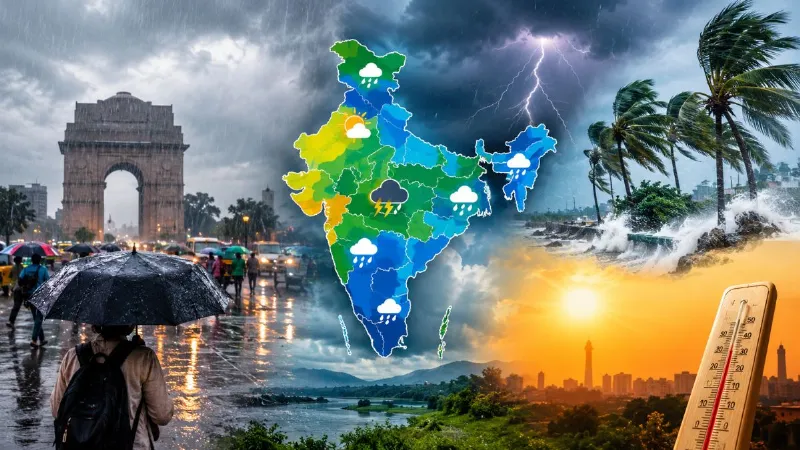
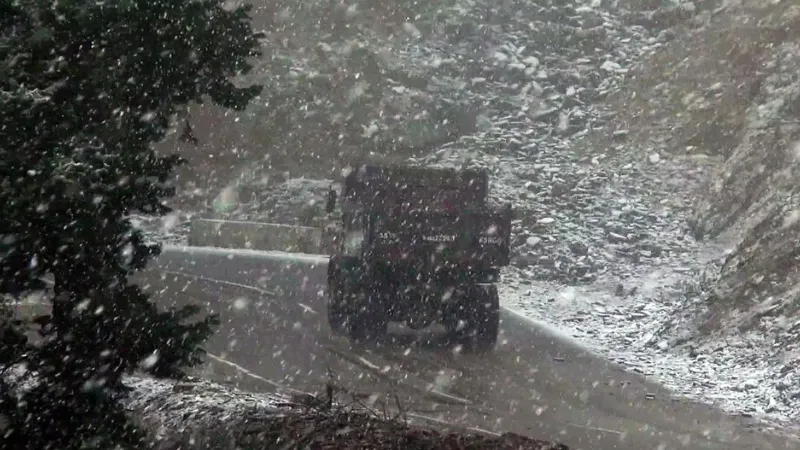
On 12 May 2026, Barmer in western Rajasthan recorded 48.3°C, the hottest reading in the state that day according to the Jaipur Meteorological Centre.
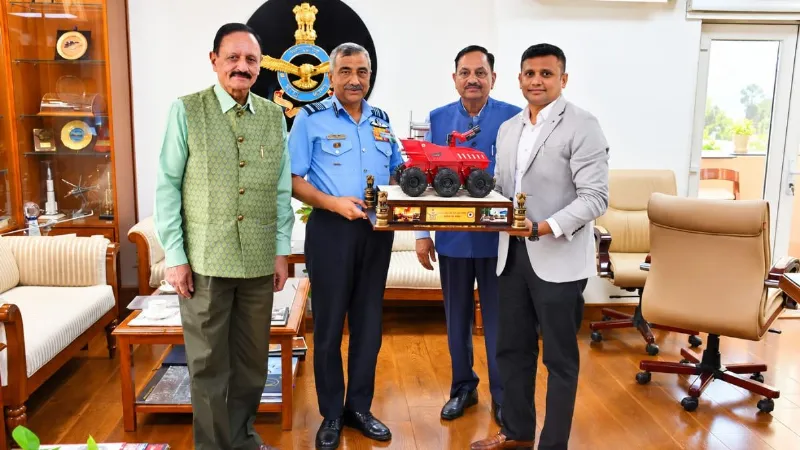


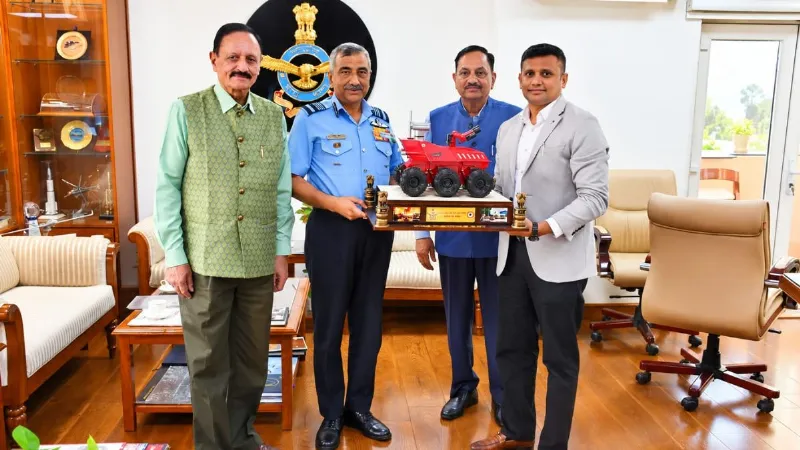
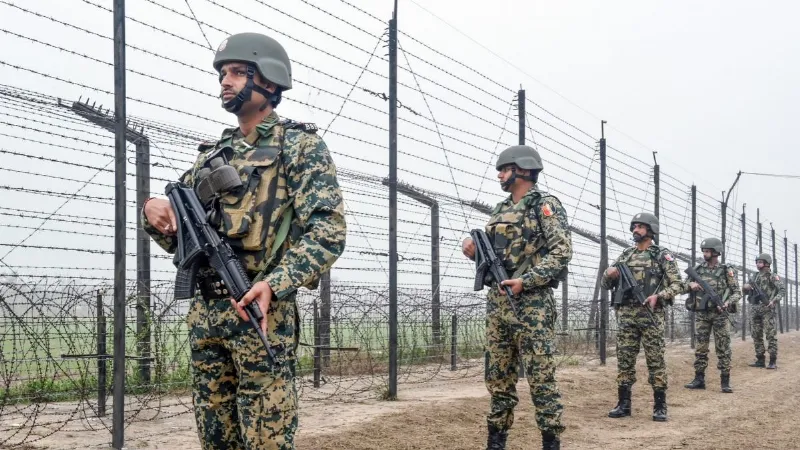
On 12 May 2026, Barmer in western Rajasthan recorded 48.3°C, the hottest reading in the state that day according to the Jaipur Meteorological Centre. Phalodi registered 46.4°C, and Jaisalmer and Bikaner crossed 45°C. Several of the air bases and locations Pakistan tried to hit with drones and missiles on 7 and 8 May 2025, during Operation Sindoor, sit across the western front: Phalodi, Uttarlai, Nal, Bhuj, Adampur and Bathinda. The Made in India FF Bot is an iDEX-winning firefighting robot built by Swadeshi Empresa Private Limited in Changodar, near Ahmedabad. It was tested at Pokhran, in the same desert region, so that struck bases can put out fires and fly again.
Heat
Heat is the first constraint. Swadeshi Empresa has worked in fire suppression and water-mist systems for about four decades and has built firefighting robots since 2017. The FF Bot has a built-in cooling system. A case study published by the maker of its wireless link says continuous self-cooling lets the outer casing withstand temperatures of 800 to 900°C while discharging 300 litres of water a minute. The material reviewed for this article states no ambient temperature rating, so 48.3°C is the climate the machine would meet in western Rajasthan, not a published specification.
Terrain
Terrain is the second constraint. At Exercise Vayu Shakti 2026, held on 27 February at the Pokhran Field Firing Range in the Thar desert, the FF Bot was tested in debris and fire scenarios and on uneven terrain. It rides on six powered wheels with suspension, which let it drag a charged fire hose or tow a vehicle weighing up to 5 tonnes clear of a fire zone. Variable speed control lets it move over rubble and turn on the spot inside narrow hangar or depot corridors.
Visibility
Visibility is the third constraint. Vayu Shakti 2026 included night-phase strikes in low-visibility conditions, and the FF Bot was tested in low visibility during the exercise. It carries optical and thermal pan-tilt-zoom cameras, along with built-in lights and a winch, so operators can spot hotspots through thick smoke.
Operator distance and corrosion resistance
These two features complete the design. Operators control the robot from outside the hazard radius, using a simple control station with a large touchscreen and a joystick. The vendor case study gives the wireless range as at least 100 metres. The body is stainless steel, which resists rust across desert sand, coastal air and chemical foam. Officials name power stations, airports, fuel storage and disaster response as civilian uses, pointing to the robot's earlier use at a major fire at the Visakhapatnam refinery.
The record, and what isn't public
The FF Bot was the first iDEX SPRINT case under DISC-7 to receive Acceptance of Necessity, in 2023, and it sits first on iDEX's procurement-orders list as on 30 June 2026. According to the company, it completed its IAF emergency procurement order, reported in January 2026 at 80 units, in 11 months against a 12-month schedule.