





Power Shift Inside Iran: IRGC Rises, Pezeshkian Projects Diplomacy as Real Authority Consolidates
Power Shift Inside Iran: As tensions between Washington, Tel Aviv and Tehran continue to escalate, the focus is no longer limited to military strikes or diplomatic exchanges.
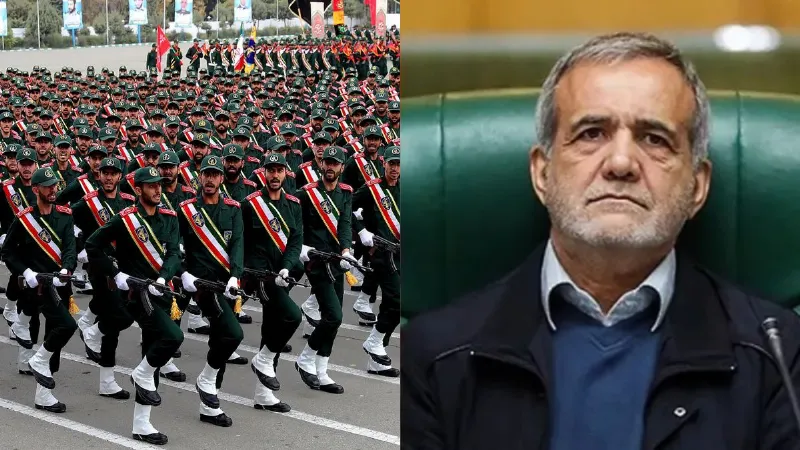

Power Shift Inside Iran: As tensions between Washington, Tel Aviv and Tehran continue to escalate, the focus is no longer limited to military strikes or diplomatic exchanges. A quieter but far more consequential shift is unfolding within Iran itself—one that is gradually redefining where real power lies and how it is projected to the world.
At the centre of this evolving landscape are three key pillars: Mojtaba Khamenei, who holds ultimate authority; the Islamic Revolutionary Guard Corps (IRGC), which has steadily expanded its operational and strategic dominance; and Masoud Pezeshkian, the elected leader who has emerged as a comparatively moderate and diplomatic voice during the crisis.
What is becoming increasingly visible is a widening gap between how Iran presents itself externally and how decisions are actually made internally. Pezeshkian continues to engage in outreach, signalling restraint and attempting to shape global perception. His communication with international audiences and softer tone stand in contrast to the IRGC’s posture of resistance and escalation. Yet, on matters of security and strategic direction, reports suggest that the IRGC has taken a more decisive role, even sidelining aspects of the civilian administration. This reflects a familiar wartime pattern—where military institutions consolidate authority while civilian leadership becomes secondary.
It is within this context that a remark by Donald Trump has drawn particular attention. His statement that the United States was “dealing with the actual leader of Iran” introduced a deliberate ambiguity. There has been no clear indication that he was referring specifically to Pezeshkian; Iran’s constitutional structure leaves little doubt that the Supreme Leader remains the ultimate authority. However, the phrasing itself has fuelled speculation about whether such rhetoric is intended to highlight internal contrasts or even subtly amplify them.
This ambiguity prompts a larger strategic debate: might ongoing external pressures—military, economic, and psychological—rest on the hope that weakening Iran's supreme leadership could pave the way for a more moderate, globally acceptable successor like Pezeshkian?
At first glance, this theory appears plausible. As an elected leader with a relatively diplomatic posture, Pezeshkian is better positioned to engage global actors and present Iran in a less confrontational light. His approach may also resonate with sections of Iranian society that have previously expressed dissatisfaction with hardline policies. For such groups, he can represent a “safer internal alternative,” shifting sentiment from outright opposition to cautious hope for change from within.
This dynamic carries important implications. By absorbing segments of public discontent—particularly among urban and moderate constituencies—Pezeshkian may act as a stabilizing figure within the system. Rather than fuelling protest movements, this could redirect dissent into institutional channels, reducing internal volatility while enhancing his own political relevance.
However, the structural realities of Iran’s system impose clear limits on how far this influence can extend. Power does not flow downward to the presidency, especially during periods of crisis. Even in a hypothetical scenario where Ali Khamenei is no longer in power, the transition would be managed by the Assembly of Experts, with strong influence from entrenched institutions—most notably the IRGC. In such circumstances, the priority would be continuity and control, not reform.
The likely outcome, therefore, would not be a moderate shift but rather the emergence of a similarly hardline leadership or an even more consolidated security-driven structure. In fact, current trends already point in this direction. As external pressure intensifies, the system appears to be tightening rather than fragmenting, with the IRGC strengthening its position and civilian authority becoming increasingly constrained.
This creates a strategic paradox. If external pressure and rhetorical signalling are intended to expose or widen internal divisions, the immediate effect appears to be the opposite. The system is not splintering—it is consolidating, and that consolidation is occurring around its most powerful hardline institutions.
Pezeshkian’s evolving role, therefore, is best understood not as a direct challenger to the system, but as a diplomatic and political buffer within it. He may enhance Iran’s global acceptability and absorb elements of domestic dissent, but his ability to fundamentally alter the balance of power remains limited under current conditions.
In the end, the unfolding situation underscores a critical reality: in systems like Iran’s, pressure does not necessarily produce transformation. More often, it reinforces existing power centers. And while moderate voices may gain visibility in times of crisis, it is the hardline structures that ultimately define the direction of the state.
Author- Mohammad Arif Khan, Middle East affairs expert
Power Shift Inside Iran: As tensions between Washington, Tel Aviv and Tehran continue to escalate, the focus is no longer limited to military strikes or diplomatic exchanges. A quieter but far more consequential shift is unfolding within Iran itself—one that is gradually redefining where real power lies and how it is projected to the world.
At the centre of this evolving landscape are three key pillars: Mojtaba Khamenei, who holds ultimate authority; the Islamic Revolutionary Guard Corps (IRGC), which has steadily expanded its operational and strategic dominance; and Masoud Pezeshkian, the elected leader who has emerged as a comparatively moderate and diplomatic voice during the crisis.
What is becoming increasingly visible is a widening gap between how Iran presents itself externally and how decisions are actually made internally. Pezeshkian continues to engage in outreach, signalling restraint and attempting to shape global perception. His communication with international audiences and softer tone stand in contrast to the IRGC’s posture of resistance and escalation. Yet, on matters of security and strategic direction, reports suggest that the IRGC has taken a more decisive role, even sidelining aspects of the civilian administration. This reflects a familiar wartime pattern—where military institutions consolidate authority while civilian leadership becomes secondary.
It is within this context that a remark by Donald Trump has drawn particular attention. His statement that the United States was “dealing with the actual leader of Iran” introduced a deliberate ambiguity. There has been no clear indication that he was referring specifically to Pezeshkian; Iran’s constitutional structure leaves little doubt that the Supreme Leader remains the ultimate authority. However, the phrasing itself has fuelled speculation about whether such rhetoric is intended to highlight internal contrasts or even subtly amplify them.
This ambiguity prompts a larger strategic debate: might ongoing external pressures—military, economic, and psychological—rest on the hope that weakening Iran's supreme leadership could pave the way for a more moderate, globally acceptable successor like Pezeshkian?
At first glance, this theory appears plausible. As an elected leader with a relatively diplomatic posture, Pezeshkian is better positioned to engage global actors and present Iran in a less confrontational light. His approach may also resonate with sections of Iranian society that have previously expressed dissatisfaction with hardline policies. For such groups, he can represent a “safer internal alternative,” shifting sentiment from outright opposition to cautious hope for change from within.
This dynamic carries important implications. By absorbing segments of public discontent—particularly among urban and moderate constituencies—Pezeshkian may act as a stabilizing figure within the system. Rather than fuelling protest movements, this could redirect dissent into institutional channels, reducing internal volatility while enhancing his own political relevance.
However, the structural realities of Iran’s system impose clear limits on how far this influence can extend. Power does not flow downward to the presidency, especially during periods of crisis. Even in a hypothetical scenario where Ali Khamenei is no longer in power, the transition would be managed by the Assembly of Experts, with strong influence from entrenched institutions—most notably the IRGC. In such circumstances, the priority would be continuity and control, not reform.
The likely outcome, therefore, would not be a moderate shift but rather the emergence of a similarly hardline leadership or an even more consolidated security-driven structure. In fact, current trends already point in this direction. As external pressure intensifies, the system appears to be tightening rather than fragmenting, with the IRGC strengthening its position and civilian authority becoming increasingly constrained.
This creates a strategic paradox. If external pressure and rhetorical signalling are intended to expose or widen internal divisions, the immediate effect appears to be the opposite. The system is not splintering—it is consolidating, and that consolidation is occurring around its most powerful hardline institutions.
Pezeshkian’s evolving role, therefore, is best understood not as a direct challenger to the system, but as a diplomatic and political buffer within it. He may enhance Iran’s global acceptability and absorb elements of domestic dissent, but his ability to fundamentally alter the balance of power remains limited under current conditions.
In the end, the unfolding situation underscores a critical reality: in systems like Iran’s, pressure does not necessarily produce transformation. More often, it reinforces existing power centers. And while moderate voices may gain visibility in times of crisis, it is the hardline structures that ultimately define the direction of the state.
Author- Mohammad Arif Khan, Middle East affairs expert