






Why India Needs More Warships? The Navy’s Deterrence Challenge Beyond Big Platforms
Naval deterrence works before a crisis starts, not after. A destroyer already patrolling a shipping lane shapes the decisions of everyone operating near it. A destroyer dispatched once a crisis has already begun arrives to manage a disaster it could have prevented.
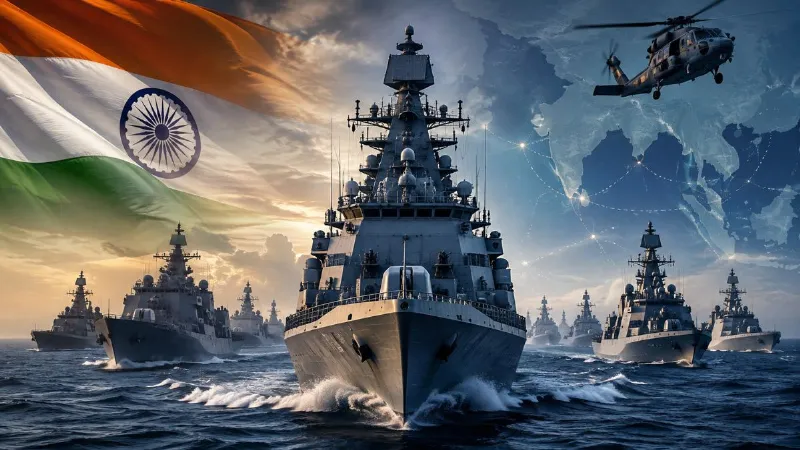


Indian Navy: Naval deterrence works before a crisis starts, not after. A destroyer already patrolling a shipping lane shapes the decisions of everyone operating near it. A destroyer dispatched once a crisis has already begun arrives to manage a disaster it could have prevented. That distinction, officers within the Indian Navy argue, is why fleet size and deployment cycles matter as much as any single flagship.
The difference between surge capability and permanent presence sits at the centre of this argument. Surge capability means a navy can generate a large force quickly when ordered to. Permanent presence means ships are already on station, day after day, in the waters where a crisis is most likely to occur. India's Navy has demonstrated it can surge, rotating frigates through anti-piracy patrols in the Gulf of Aden and deploying destroyers for high-visibility exercises with partner navies. What it has struggled to sustain, according to defence budget analysis published by Indian think tanks, is round-the-clock presence across every chokepoint that matters to Indian trade and energy security simultaneously.
Fleet size is the constraint underneath that struggle. The Indian Navy's own long-term plans have called for a fleet approaching 175 to 200 ships by 2035, including destroyers, frigates, corvettes, submarines, and support and replenishment vessels, a target the service has not yet reached — it currently operates somewhere in the range of 140 to 150 vessels. Every ship undergoing a scheduled refit or long-term maintenance removes a hull from active rotation, meaning the operational fleet available on any given day is meaningfully smaller than the number on paper. A navy running short of destroyers cannot simply order its aircraft carriers to cover the gap, since a carrier without its escort ships is a target rather than a strike group.
This is why naval planners distinguish between headline platforms and the fleet that supports them. An aircraft carrier requires destroyers for air defence, frigates for anti-submarine screening, and replenishment ships to keep it fuelled and supplied far from home port. India's push for a third carrier, IAC-2, depends on the Navy simultaneously expanding its destroyer and frigate construction to provide that escort capability, or the carrier itself becomes strategically constrained regardless of its own capabilities.
The deployment cycle problem compounds the arithmetic. A ship on a six-month deployment typically requires a second ship working up to relieve it and a third undergoing post-deployment maintenance, meaning sustaining one ship on continuous station in the Indian Ocean can require a rotation of two to three hulls in total. Multiplied across every chokepoint India considers strategically vital, from the Gulf of Aden to the Malacca Strait to India's own island territories near the Andaman Sea, the fleet size required to maintain genuine persistent presence everywhere at once significantly exceeds what India currently operates.
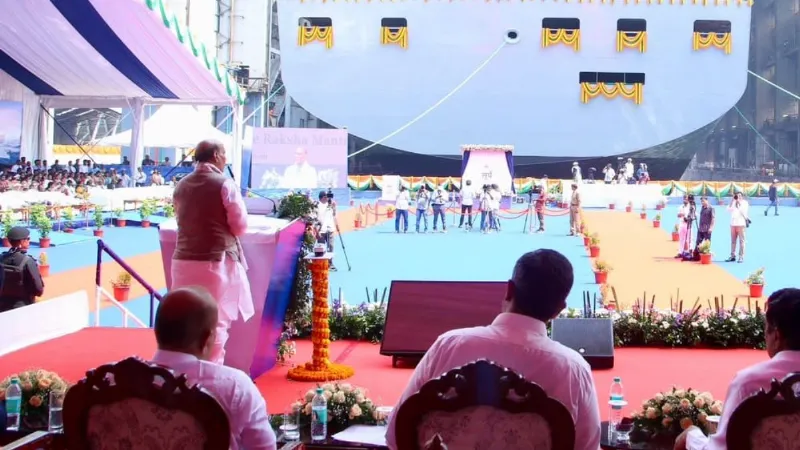
Indian shipyards, including Mazagon Dock Shipbuilders Limited (MDL) and Garden Reach Shipbuilders & Engineers (GRSE), have driven the recent expansion in destroyer and frigate production. The four Project 15B destroyers were completed in 2024, and the Navy is now working through Project 17A, which will eventually deliver seven stealth frigates split between the two yards, alongside early planning for a follow-on destroyer programme.
Officers involved in fleet planning have told Indian defence publications that the pace of that construction, not the headline carrier debate, will ultimately determine whether India's Navy can deliver the persistent presence its economic and strategic interests require, or whether it continues to rely on surging ships toward crises that better forward deployment could have deterred in the first place.
MUST READ: पश्चिम एशिया तनाव के बीच भारत आएंगे ईरानी राष्ट्रपति पेजेशकियान, BRICS समिट में होंगे शामिल
Indian Navy: Naval deterrence works before a crisis starts, not after. A destroyer already patrolling a shipping lane shapes the decisions of everyone operating near it. A destroyer dispatched once a crisis has already begun arrives to manage a disaster it could have prevented. That distinction, officers within the Indian Navy argue, is why fleet size and deployment cycles matter as much as any single flagship.
The difference between surge capability and permanent presence sits at the centre of this argument. Surge capability means a navy can generate a large force quickly when ordered to. Permanent presence means ships are already on station, day after day, in the waters where a crisis is most likely to occur. India's Navy has demonstrated it can surge, rotating frigates through anti-piracy patrols in the Gulf of Aden and deploying destroyers for high-visibility exercises with partner navies. What it has struggled to sustain, according to defence budget analysis published by Indian think tanks, is round-the-clock presence across every chokepoint that matters to Indian trade and energy security simultaneously.
Fleet size is the constraint underneath that struggle. The Indian Navy's own long-term plans have called for a fleet approaching 175 to 200 ships by 2035, including destroyers, frigates, corvettes, submarines, and support and replenishment vessels, a target the service has not yet reached — it currently operates somewhere in the range of 140 to 150 vessels. Every ship undergoing a scheduled refit or long-term maintenance removes a hull from active rotation, meaning the operational fleet available on any given day is meaningfully smaller than the number on paper. A navy running short of destroyers cannot simply order its aircraft carriers to cover the gap, since a carrier without its escort ships is a target rather than a strike group.
This is why naval planners distinguish between headline platforms and the fleet that supports them. An aircraft carrier requires destroyers for air defence, frigates for anti-submarine screening, and replenishment ships to keep it fuelled and supplied far from home port. India's push for a third carrier, IAC-2, depends on the Navy simultaneously expanding its destroyer and frigate construction to provide that escort capability, or the carrier itself becomes strategically constrained regardless of its own capabilities.
The deployment cycle problem compounds the arithmetic. A ship on a six-month deployment typically requires a second ship working up to relieve it and a third undergoing post-deployment maintenance, meaning sustaining one ship on continuous station in the Indian Ocean can require a rotation of two to three hulls in total. Multiplied across every chokepoint India considers strategically vital, from the Gulf of Aden to the Malacca Strait to India's own island territories near the Andaman Sea, the fleet size required to maintain genuine persistent presence everywhere at once significantly exceeds what India currently operates.
Indian shipyards, including Mazagon Dock Shipbuilders Limited (MDL) and Garden Reach Shipbuilders & Engineers (GRSE), have driven the recent expansion in destroyer and frigate production. The four Project 15B destroyers were completed in 2024, and the Navy is now working through Project 17A, which will eventually deliver seven stealth frigates split between the two yards, alongside early planning for a follow-on destroyer programme.
Officers involved in fleet planning have told Indian defence publications that the pace of that construction, not the headline carrier debate, will ultimately determine whether India's Navy can deliver the persistent presence its economic and strategic interests require, or whether it continues to rely on surging ships toward crises that better forward deployment could have deterred in the first place.
MUST READ: पश्चिम एशिया तनाव के बीच भारत आएंगे ईरानी राष्ट्रपति पेजेशकियान, BRICS समिट में होंगे शामिल