





Iran-US Ceasefire: A Tactical Pause or Calculated Makeshift Arrangement?
The Iran-U.S. ceasefire announced in April 2026 is being presented as a step toward stability. In reality, it represents a calculated makeshift arrangement


The Iran-U.S. ceasefire announced in April 2026 is being presented as a step toward stability. In reality, it represents a calculated makeshift arrangement—a deliberate strategy to shift the battlefield away from Iran's strongest leverage, ease pressure on the current region, create a counter to Iran and its proxies through Israel, provide face-saving cover for the Trump administration, and protect GCC states from direct Iranian attack.
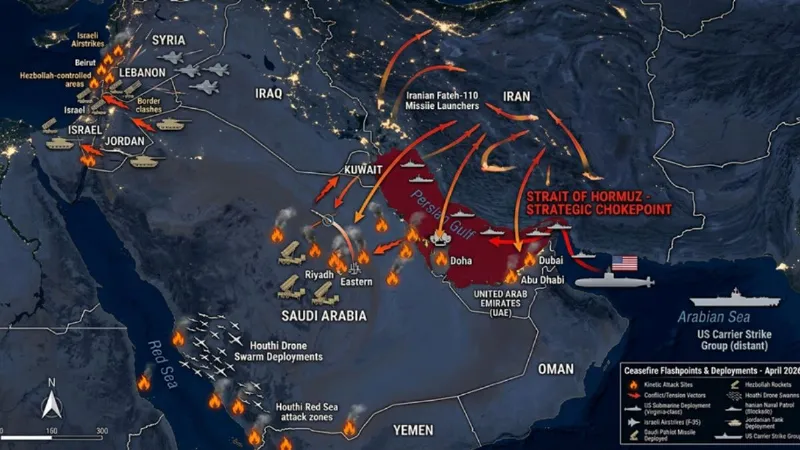
The immediate issue at the centre of this shift is the Strait of Hormuz. Iran has long regarded this waterway as its most powerful strategic weapon, and the recent tensions showed why. By threatening this chokepoint, through which a major share of global oil passes, Tehran created severe pressure on Gulf economies, international shipping, and energy markets. The effect was not only regional fear, but also a sharp sense of urgency in Washington and among Gulf capitals to prevent a full-scale crisis.
That pressure was felt most strongly in the GCC states. Countries such as Saudi Arabia, the UAE, and Qatar faced the risk of disruption in imports, energy-linked trade, and financial stability. Their concern was immediate: the longer the conflict continued, the greater the risk that the Gulf itself would become the main casualty of the wider confrontation. For them, the priority was not symbolic victory, but the restoration of stability before the region crossed a dangerous threshold.
Yet this manoeuvre unfolds against a grim global backdrop: killing innocents has become the new normal, with global agencies' influence rendered negligible. Superpowers operate as either active belligerents or impotent spectators—from Gaza's devastation and Ukraine's grinding attrition to Houthi Red Sea assaults, Syria's endless chaos, Iran's proxy escalations, and Lebanon's fresh bombardment. These stark examples frame the ceasefire not as moral victory, but geopolitical triage amid superpower paralysis.
This is why the ceasefire should be understood as a tactical manoeuvre rather than a true settlement. It relieves pressure on the Gulf, protects trade routes from total collapse, and temporarily shifts the conflict away from the most dangerous point of leverage Iran holds. In that sense, the ceasefire is a practical response to crisis, not a final solution—designed specifically to neutralize direct Iranian attacks on GCC territory while repositioning Israel against Tehran's proxy network.
The United States has been pushed into the centre of this arrangement. Washington is being treated as the main actor responsible for de-escalation, even as it faces pressure from both sides. On one hand, Gulf partners expect protection and regional stability. On the other, global markets and political realities make prolonged confrontation increasingly difficult to sustain. The Trump administration gains crucial face-saving breathing room, demonstrating crisis management without full-scale war.
Israel's role becomes pivotal in this strategy. Instead of keeping the conflict focused on Hormuz, confrontation pivots toward Lebanon and Jordanian borders—prime terrain for countering Hezbollah, Hamas supply lines, and IRGC networks. This battlefield shift serves multiple purposes: it dilutes Iran's Hormuz advantage, positions Jerusalem offensively against proxies, and reduces GCC exposure to direct Tehran retaliation.
Yet the end game reveals persistent tension. Even after ceasefire declarations, Iran continues missile barrages into GCC territory, keeping the region unstable to amplify its bargaining power. By targeting Gulf states within easy reach, Tehran converts Israeli actions into American liabilities—each Tel Aviv strike risks Riyadh refinery hits or Dubai port warnings. This cycle corners Washington threefold: protecting shaken allies, countering post-ceasefire aggression, managing oil market panic.
Iran's strategy proves brutally effective. Holding Hormuz while destabilizing GCC targets creates perfect asymmetry. Tehran forces America backward: direct confrontation grows toxic amid civilian casualties; multilateral talks favour Iranian positioning. The U.S. replenishes Patriot stocks, but GCC confidence erodes as protection proves inadequate.
The larger picture reveals managed instability. The ceasefire lowers immediate Gulf danger and trade shocks, but relocates—not resolves—the conflict. Iran preserves its strongest weapons; GCC vulnerability persists; Washington remains trapped managing fallout it cannot fully control.
This arrangement delivers no lasting peace, only pragmatic repositioning. Israel counters proxies effectively, Trump saves face politically, GCC territory gains temporary shield. Yet Iran's missile reach and Hormuz grip endure, forcing negotiations from positions of calculated strength.
In the end, this ceasefire functions less as resolution than diversion—a battlefield shift easing regional pressure while containing, not eliminating, the core struggle. The war enters new phase: leverage redistribution, proxy containment, Gulf stabilization. But until Iran's strategic weapons are truly neutralized, today's tactical pause remains tomorrow's prelude to renewed confrontation.
Mohd Arif Khan, Expert Middle East affairs
The Iran-U.S. ceasefire announced in April 2026 is being presented as a step toward stability. In reality, it represents a calculated makeshift arrangement—a deliberate strategy to shift the battlefield away from Iran's strongest leverage, ease pressure on the current region, create a counter to Iran and its proxies through Israel, provide face-saving cover for the Trump administration, and protect GCC states from direct Iranian attack.
The immediate issue at the centre of this shift is the Strait of Hormuz. Iran has long regarded this waterway as its most powerful strategic weapon, and the recent tensions showed why. By threatening this chokepoint, through which a major share of global oil passes, Tehran created severe pressure on Gulf economies, international shipping, and energy markets. The effect was not only regional fear, but also a sharp sense of urgency in Washington and among Gulf capitals to prevent a full-scale crisis.
That pressure was felt most strongly in the GCC states. Countries such as Saudi Arabia, the UAE, and Qatar faced the risk of disruption in imports, energy-linked trade, and financial stability. Their concern was immediate: the longer the conflict continued, the greater the risk that the Gulf itself would become the main casualty of the wider confrontation. For them, the priority was not symbolic victory, but the restoration of stability before the region crossed a dangerous threshold.
Yet this manoeuvre unfolds against a grim global backdrop: killing innocents has become the new normal, with global agencies' influence rendered negligible. Superpowers operate as either active belligerents or impotent spectators—from Gaza's devastation and Ukraine's grinding attrition to Houthi Red Sea assaults, Syria's endless chaos, Iran's proxy escalations, and Lebanon's fresh bombardment. These stark examples frame the ceasefire not as moral victory, but geopolitical triage amid superpower paralysis.
This is why the ceasefire should be understood as a tactical manoeuvre rather than a true settlement. It relieves pressure on the Gulf, protects trade routes from total collapse, and temporarily shifts the conflict away from the most dangerous point of leverage Iran holds. In that sense, the ceasefire is a practical response to crisis, not a final solution—designed specifically to neutralize direct Iranian attacks on GCC territory while repositioning Israel against Tehran's proxy network.
The United States has been pushed into the centre of this arrangement. Washington is being treated as the main actor responsible for de-escalation, even as it faces pressure from both sides. On one hand, Gulf partners expect protection and regional stability. On the other, global markets and political realities make prolonged confrontation increasingly difficult to sustain. The Trump administration gains crucial face-saving breathing room, demonstrating crisis management without full-scale war.
Israel's role becomes pivotal in this strategy. Instead of keeping the conflict focused on Hormuz, confrontation pivots toward Lebanon and Jordanian borders—prime terrain for countering Hezbollah, Hamas supply lines, and IRGC networks. This battlefield shift serves multiple purposes: it dilutes Iran's Hormuz advantage, positions Jerusalem offensively against proxies, and reduces GCC exposure to direct Tehran retaliation.
Yet the end game reveals persistent tension. Even after ceasefire declarations, Iran continues missile barrages into GCC territory, keeping the region unstable to amplify its bargaining power. By targeting Gulf states within easy reach, Tehran converts Israeli actions into American liabilities—each Tel Aviv strike risks Riyadh refinery hits or Dubai port warnings. This cycle corners Washington threefold: protecting shaken allies, countering post-ceasefire aggression, managing oil market panic.
Iran's strategy proves brutally effective. Holding Hormuz while destabilizing GCC targets creates perfect asymmetry. Tehran forces America backward: direct confrontation grows toxic amid civilian casualties; multilateral talks favour Iranian positioning. The U.S. replenishes Patriot stocks, but GCC confidence erodes as protection proves inadequate.
The larger picture reveals managed instability. The ceasefire lowers immediate Gulf danger and trade shocks, but relocates—not resolves—the conflict. Iran preserves its strongest weapons; GCC vulnerability persists; Washington remains trapped managing fallout it cannot fully control.
This arrangement delivers no lasting peace, only pragmatic repositioning. Israel counters proxies effectively, Trump saves face politically, GCC territory gains temporary shield. Yet Iran's missile reach and Hormuz grip endure, forcing negotiations from positions of calculated strength.
In the end, this ceasefire functions less as resolution than diversion—a battlefield shift easing regional pressure while containing, not eliminating, the core struggle. The war enters new phase: leverage redistribution, proxy containment, Gulf stabilization. But until Iran's strategic weapons are truly neutralized, today's tactical pause remains tomorrow's prelude to renewed confrontation.
Mohd Arif Khan, Expert Middle East affairs