





2011 to 2026: Why the Latest Pakistan Navy Collision Revives an Old Maritime Controversy
The collision involving an Indian Navy warship and a Pakistan Navy vessel in the Arabian Sea has revived memories of another serious maritime confrontation between the two navies — the June 2011 incident involving INS Godavari and PNS Babur.
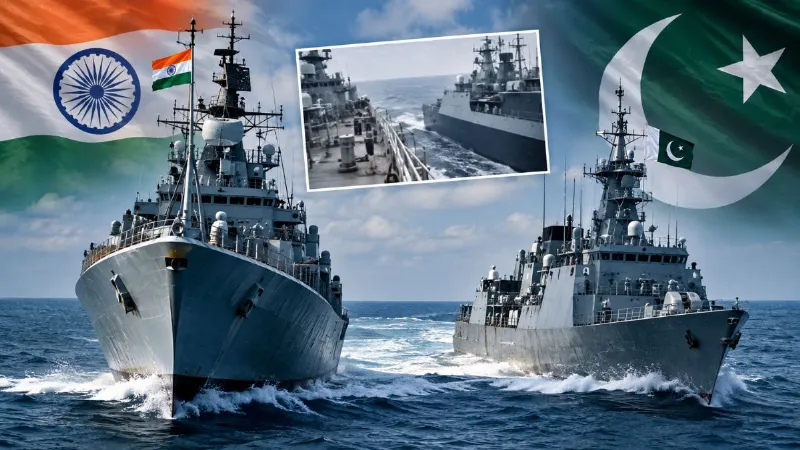


The collision involving an Indian Navy warship and a Pakistan Navy vessel in the Arabian Sea has revived memories of another serious maritime confrontation between the two navies — the June 2011 incident involving INS Godavari and PNS Babur.
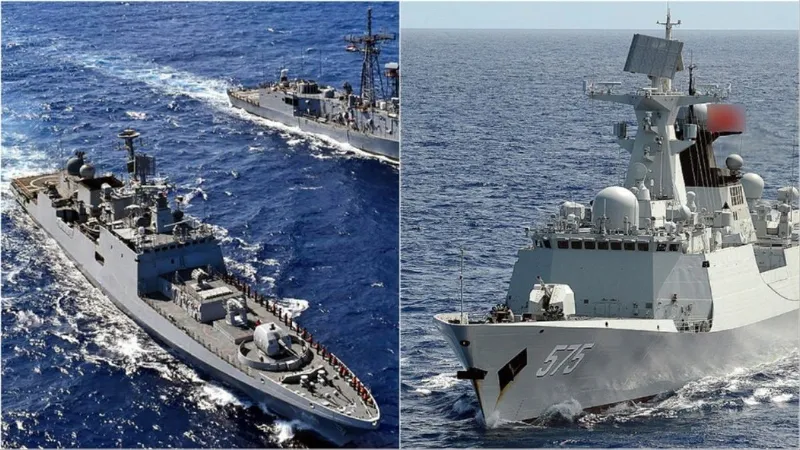
On June 16, 2011, in the Gulf of Aden, the Indian frigate INS Godavari — lead ship of the Godavari-class, built at Mazagon Dock in Mumbai and commissioned in December 1983 — was engaged in an anti-piracy escort mission, the very kind of humanitarian maritime security work Indian warships have carried out in the region since 2008. Nearby was the Pakistan Navy's warship PNS Babur, which was itself escorting the merchant vessel MV Suez following the release of its crew, including Indian sailors, from Somali pirates.
According to the Indian Navy's account at the time, PNS Babur closed on Godavari at high speed from astern and executed what India's Defence Minister described in Parliament as a manoeuvre "in gross violation" of navigational safety regulations. The Pakistani ship brushed against Godavari, damaging the extended safety net on its helicopter deck. Footage that later surfaced, reportedly filmed by a Pakistani sailor aboard Babur, showed the two ships brushing past each other amid anti-India sloganeering. Pakistan disputed this version at the time, lodging its own protest and alleging that Godavari had hampered Babur's rescue operation and manoeuvred itself dangerously — a counter-narrative India rejected as "incorrect and based on misinformation."
India invoked the same provision then that it has invoked now: Article 10 of the 1991 bilateral agreement, mandating a three-nautical-mile buffer between the two countries' naval vessels and submarines in international waters. New Delhi summoned Pakistan's Naval Adviser in 2011, just as it summoned the Chargé d'Affaires this week. The mechanism for protesting has stayed largely the same for a decade and a half because, evidently, the underlying behaviour it is meant to deter has not changed either.
The incident involving PNS Hunain fits a similar template: a Pakistan Navy vessel closing at high speed on an Indian ship engaged in routine surveillance, in what India has described as an unsafe and unprofessional manoeuvre resulting in contact. Indian officials have noted that this is the second such close-manoeuvre incident in six months in the Arabian Sea.
It is also worth setting these incidents against Pakistan's own record of shipboard safety more broadly. Pakistan Navy vessels have suffered serious accidents over the years, including a 2005 fire aboard the fleet tanker PNS Moawin at Karachi dockyard that killed six personnel and injured roughly ninety more — an incident the Navy attributed to human error and failure to follow standard procedure during routine maintenance.
Fifteen years separate the Godavari incident from this week's collision, but the outline is familiar: a Pakistan Navy vessel manoeuvring at high speed near an Indian ship, a cited breach of the 1991 agreement, and an Indian protest lodged through the same diplomatic channel. Pakistan has not yet issued a public response to the latest incident; when — and if — it does, it will be worth watching whether it echoes 2011's pattern of a counter-protest of its own.
The collision involving an Indian Navy warship and a Pakistan Navy vessel in the Arabian Sea has revived memories of another serious maritime confrontation between the two navies — the June 2011 incident involving INS Godavari and PNS Babur.
On June 16, 2011, in the Gulf of Aden, the Indian frigate INS Godavari — lead ship of the Godavari-class, built at Mazagon Dock in Mumbai and commissioned in December 1983 — was engaged in an anti-piracy escort mission, the very kind of humanitarian maritime security work Indian warships have carried out in the region since 2008. Nearby was the Pakistan Navy's warship PNS Babur, which was itself escorting the merchant vessel MV Suez following the release of its crew, including Indian sailors, from Somali pirates.
According to the Indian Navy's account at the time, PNS Babur closed on Godavari at high speed from astern and executed what India's Defence Minister described in Parliament as a manoeuvre "in gross violation" of navigational safety regulations. The Pakistani ship brushed against Godavari, damaging the extended safety net on its helicopter deck. Footage that later surfaced, reportedly filmed by a Pakistani sailor aboard Babur, showed the two ships brushing past each other amid anti-India sloganeering. Pakistan disputed this version at the time, lodging its own protest and alleging that Godavari had hampered Babur's rescue operation and manoeuvred itself dangerously — a counter-narrative India rejected as "incorrect and based on misinformation."
India invoked the same provision then that it has invoked now: Article 10 of the 1991 bilateral agreement, mandating a three-nautical-mile buffer between the two countries' naval vessels and submarines in international waters. New Delhi summoned Pakistan's Naval Adviser in 2011, just as it summoned the Chargé d'Affaires this week. The mechanism for protesting has stayed largely the same for a decade and a half because, evidently, the underlying behaviour it is meant to deter has not changed either.
The incident involving PNS Hunain fits a similar template: a Pakistan Navy vessel closing at high speed on an Indian ship engaged in routine surveillance, in what India has described as an unsafe and unprofessional manoeuvre resulting in contact. Indian officials have noted that this is the second such close-manoeuvre incident in six months in the Arabian Sea.
It is also worth setting these incidents against Pakistan's own record of shipboard safety more broadly. Pakistan Navy vessels have suffered serious accidents over the years, including a 2005 fire aboard the fleet tanker PNS Moawin at Karachi dockyard that killed six personnel and injured roughly ninety more — an incident the Navy attributed to human error and failure to follow standard procedure during routine maintenance.
Fifteen years separate the Godavari incident from this week's collision, but the outline is familiar: a Pakistan Navy vessel manoeuvring at high speed near an Indian ship, a cited breach of the 1991 agreement, and an Indian protest lodged through the same diplomatic channel. Pakistan has not yet issued a public response to the latest incident; when — and if — it does, it will be worth watching whether it echoes 2011's pattern of a counter-protest of its own.