






Aatmanirbhar Warships: India Moves Towards Indigenous Ship Electronics as HSL Joins Hands with Cyient DLM
Aatmanirbhar Warships:HSL and Cyient DLM join hands to develop indigenous radar, navigation and communication systems for Indian warships.dependence on imported technologies for naval warships.
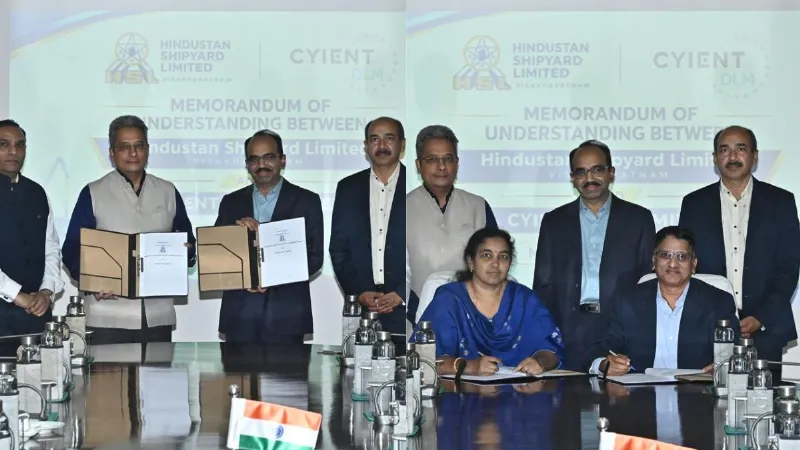


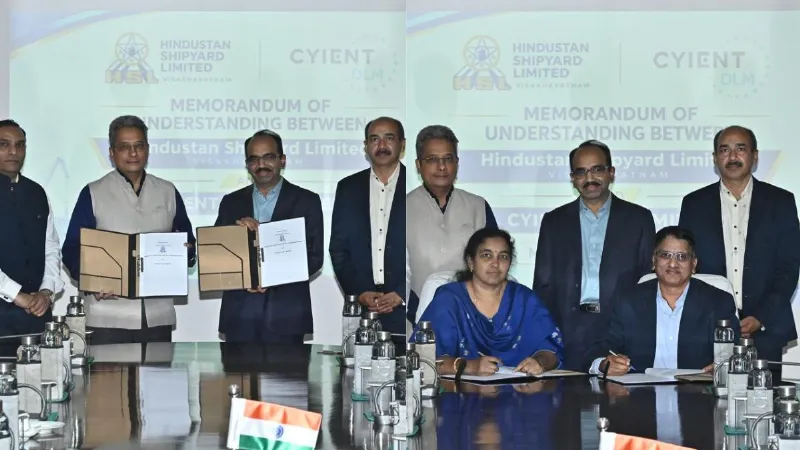
Aatmanirbhar Warships: India is taking another significant step towards self-reliance in defence manufacturing, with a renewed focus on reducing dependence on imported technologies for its naval fleet. In a major development, Miniratna Defence Public Sector Undertaking (DPSU) Hindustan Shipyard Limited (HSL) has signed a strategic Memorandum of Understanding (MoU) with Cyient DLM to jointly develop and manufacture advanced ship electronics systems in India. The partnership aims to bring critical technologies used in warships under the indigenous manufacturing ecosystem.
Indigenous Technology to Power Indian Naval Ships
Under the agreement, HSL and Cyient DLM will work together to develop a range of navigation, communication and ship electronics systems that have largely been sourced from international suppliers. The proposed systems include navigation and solid-state radars, Electronic Chart Display and Information Systems (ECDIS), autopilot technology, Global Maritime Distress and Safety Systems (GMDSS), Fleet Broadband, Voyage Data Recorders, weather monitoring systems and helicopter landing aids. The initiative is expected to strengthen India's capabilities in building not just warships but also their critical electronic infrastructure.
Partnership to Strengthen Defence Manufacturing
The collaboration is expected to increase the indigenous content in every vessel manufactured and delivered by HSL. Apart from reducing dependence on foreign suppliers, the partnership aims to shorten delivery timelines, improve supply-chain security and bring down lifecycle costs. It is also expected to make maintenance, upgrades and refits faster and more efficient. The initiative could open up fresh opportunities for Indian MSMEs and deep-tech companies by creating greater demand for locally developed defence technologies.
HSL CMD Calls It a Major Step Towards Aatmanirbhar Bharat
Commenting on the agreement, Rear Admiral C R Raghuram, VSM (Retd.), Chairman and Managing Director of HSL, said the partnership would add an Indian technological identity to the country's naval platforms. He highlighted that ships built at Indian shipyards should also carry indigenous intelligence in their radars, precision in navigation systems and locally developed communication capabilities. Describing the agreement as a reflection of Aatmanirbhar Bharat, he said the collaboration would help strengthen India's maritime capabilities.
Joint Design and Testing Teams to Drive Development
As part of the agreement, both companies will identify priority systems and establish joint design and testing teams to accelerate development. The products will subsequently undergo Naval and Classification Society qualification processes before being deployed on selected platforms. The initial phase of implementation will include pilot installations on selected vessels, beginning with the 18 Next Generation Fast Patrol Vessels. This phased approach is expected to help validate the technology before its wider adoption across naval platforms.
Cyient DLM Highlights India's Maritime Defence Potential
Rajendra Velagapudi, Managing Director and CEO of Cyient DLM, said India's maritime and defence ecosystem offers significant opportunities for indigenous technology development and manufacturing. He reaffirmed the company's commitment to building the technological and manufacturing capabilities required to support this growing sector. The HSL-Cyient DLM partnership marks another important move towards strengthening India's domestic defence supply chain and advancing the vision of self-reliant naval manufacturing.