






Same Rivers, Different Fortunes: Power Surplus in J&K, Blackouts in PoJK
Pakistan-Occupied Jammu and Kashmir's rivers feed Pakistan's national grid while its own people ration electricity and revolt over their bills.
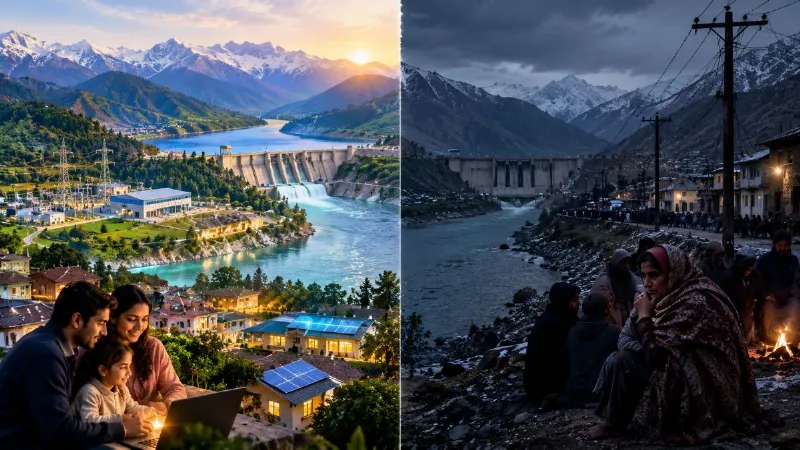


Pakistan-Occupied Jammu and Kashmir's rivers feed Pakistan's national grid while its own people ration electricity and revolt over their bills. Jammu and Kashmir is harnessing its rivers to power its own growth.
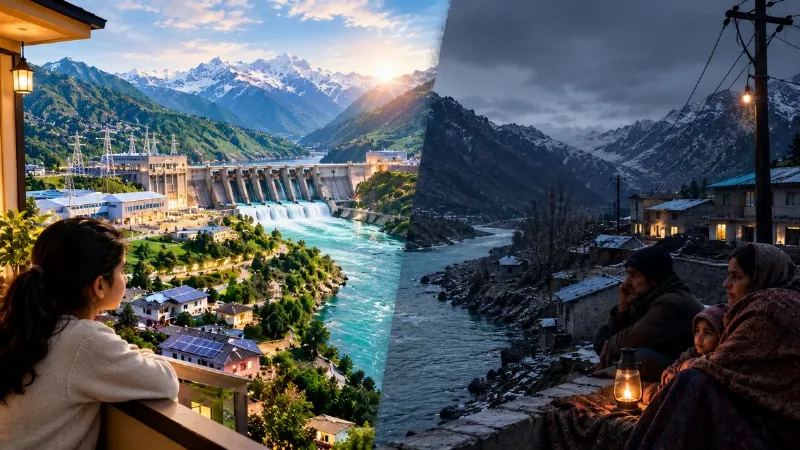
In January 2025, about 1,000 residents of Hunza in Gilgit-Baltistan braved minus 15 degrees Celsius to block the Karakoram Highway. Their grievance was simple: they received one or two hours of electricity a day. Their blockade stranded dozens of freight lorries bound for China. They live beside some of the most powerful rivers in Asia. Across the Line of Control, Jammu and Kashmir is turning the same Himalayan water into light, industry and jobs for its own people.
Rivers That Serve Islamabad
Pakistan-Occupied Jammu and Kashmir (PoJK) hosts 31 commissioned hydropower projects with a combined capacity of 3,205 megawatts, eight times the territory's own peak demand of 400 megawatts. Little of that power stays at home. The 969-megawatt Neelum–Jhelum plant has fed Pakistan's national grid since 2018, and it ran for years without any formal agreement with the PoJK government. Under the Mangla dam deal, Islamabad paid the territory just 42 paise a unit in water use charges, worth a mere Rs 712 million in 2021–22.
The people who live beside these turbines get scraps. PoJK's electricity department can supply only 330 megawatts at its peak, so nearly a fifth of demand goes unmet, and each resident receives just 408 kilowatt-hours a year. The department bought 2,807 million units in 2024 but sold only 1,673 million, losing two units in every five along the way. Almost four per cent of residents still have no connection at all.
Bills That Spark Revolt
Those failures exploded onto the streets. Residents began protesting in 2023 after flour prices soared and electricity rates jumped. The Joint Awami Action Committee then demanded power priced at what PoJK's own dams cost to run. In May 2024, its wheel-jam strike brought the territory to a standstill and clashes killed a police officer, and Islamabad bought calm with a Rs 23 billion subsidy. PoJK's own prime minister conceded that electricity and wheat lay outside his government's control.
Gilgit-Baltistan in the Dark
Gilgit-Baltistan fares even worse. Its 171 power stations have an installed capacity of just 239 megawatts, and they generate 117 megawatts in winter against demand of 455 megawatts, leaving three-quarters of need unmet. Gilgit endures 19 to 20 hours of load shedding on winter days, and electricity prices in the region more than doubled after 2021. Summer brings no relief: in July 2026, residents of Gilgit and Chilas blocked the Karakoram Highway again over cuts of more than ten hours a day in heat approaching 40 degrees Celsius.
Pakistan's strategic dam in the region, which Islamabad designed to meet the country's water and energy needs, adds insult to injury. Families who surrendered land for the Diamer–Bhasha dam blocked the highway in April 2026, demanding the compensation and jobs it had promised them.
Jammu and Kashmir Powers Ahead
Jammu and Kashmir tells a different story. Its residents used 1,532 kilowatt-hours each in 2023–24, up from 1,322 three years earlier and 3.7 times the PoJK figure. The Union Territory met 98.6 per cent of its energy demand that year, and its hydel plants generated more than 16,300 million units.
It is now building at speed, drawing on 14,867 megawatts of identified potential. Jammu and Kashmir operates 32 hydropower projects with 3,540 megawatts of capacity and plans to add 1,685.7 megawatts in 2026–27 alone, reaching 7,315 megawatts by 2030–31. The 900-megawatt Baglihar station already anchors the fleet, while the 1,000-megawatt Pakal Dul and 624-megawatt Kiru projects lead the next wave. By December 2035, the Union Territory aims for nearly 11,000 megawatts, more than triple today's capacity, with the 1,856-megawatt Sawalkote project among the later additions.
The grid is keeping pace. The Power Development Department runs 1,66,376 circuit kilometres of lines with 31,743.5 megavolt-amperes of transmission and distribution capacity, and it targets 500 megawatts of grid-connected solar power and 15,000 solar pumps. Smart meters, 5.74 lakh of them by June 2024, cut transmission and distribution losses by a quarter and lifted monthly collections by a tenth.
Same Rivers, Different Fortunes
The Jhelum and the Kishanganga, which Pakistan calls the Neelum, rise in Jammu and Kashmir before they cross into PoJK. On the Indian side, the water lights homes, runs factories and funds a grid that grows every year. On the Pakistani side, it spins turbines for distant cities while the people beside the riverbanks endure 20-hour blackouts, block highways and strike over their bills. Geography gave both halves of Kashmir the same gift. Only one government chose to share it with the people who live there.